How a walk in the mountains turned into a powerful emotional experience.
It’s been a deliberately slow start to the year at School of the Wild, so as we wait for warmer weather I’d like to share a curious thing that happened to me over Christmas.
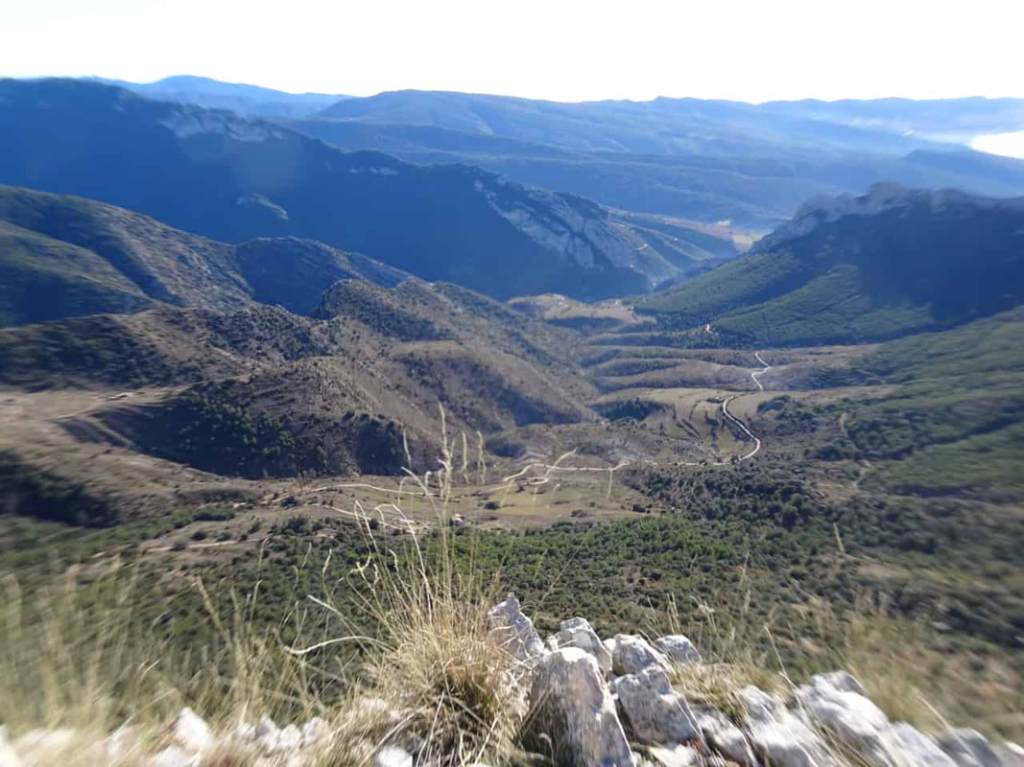
I was in the Spanish Pyrenees staying near the top of a secluded valley, surrounded on three sides by high ridges.
One day I decided to do a Medicine Walk, a ceremony of aimless wandering. The idea: you set off with a question that you ask of the land, and then let go of the question and go where you feel drawn. Then pay attention to what happens.
Medicine Walks are a mysterious thing, they turn the land into a mirror for your inner world, and can be really helpful in answering life’s questions. I’ve always found them to be surprising, and pertinent, and powerful.
So in the morning I head off from where I’m staying, up to a gap between the ridges.
The track is steep and it takes a while to get to the top. When I get there, out of breath, I sit for a while on a rock overlooking the valley, taking in the view.
After a bit, I’m drawn to go further up. There are no real paths just lots of goat tracks and loose rocks between the gorse and mountain shrubs. It’s hard going. Steep, and a bit unstable.
It doesn’t take long before I get stuck. I’m fed up and a little anxious if I’m honest. So I turn around, and go back to the rock to recuperate.
When I’m recovered, I stand up and it’s then that I suddenly hear the sound of wings beating…
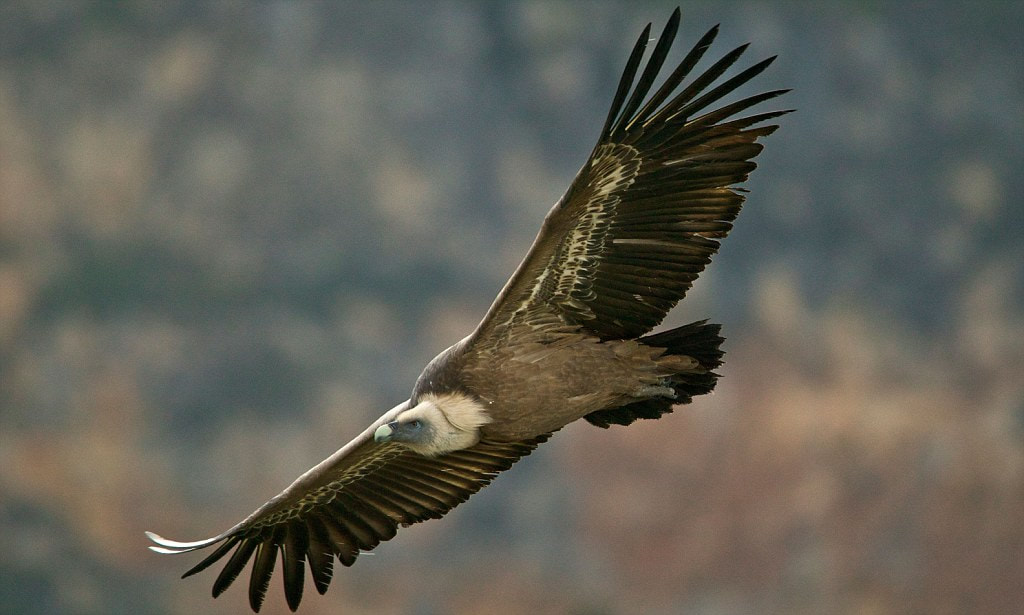
A whole colony of about twenty vultures come flying over my head, one at a time.
Because I’m the shadow of the hill, they don’t realise I’m there until the last minute.
They are seriously close. Maybe just three or four metres away from me.
I hear the wind whistling through their wings, and see the whites of their eyes.
And you know, vultures, they’re huge!
At first I’m pretty scared. I have an image in my head of vultures in wildlife documentaries feasting on large animals…
But I notice that they are startled when they see me, and I realise that they’re more scared of me than I am of them, so I relax.
They keep coming. One after another, after another. And I am just wow. WOW.
The vultures soar past me into the clear blue sky over the valley. I watch them as they glide off into the distance.
It’s so beautiful… so perfect… and I’m so touched by it… that without expecting it, a deep wave of emotion rises up from inside me, and I sob uncontrollably.
Even now I’m not really sure why, but what I do know is that wildness is intimately connected with our psyche and our soul. And nature has the power to touch us, to heal us, and to allow us to be human.
After that release, the rest of my walk was very happy, and joyful.
Interested in a Medicine Walk? Have a look at Threshold Crossing for leaders.
Connecting with the land and each other. Reflections from an Earth Dialogue on the South Downs with Charlotte Du Cann of the Dark Mountain Project
“Just don’t mention the Domesday Book,” says Charlotte.
We’re walking back from our morning recce and discussing how I’m going to introduce the Earth Dialogue she’s running for us at Saddlescombe Farm on the South Downs.
Part discussion, part encounter, part perception exercise, an Earth Dialogue is a way of connecting with the land using your heart and your felt sense, not your thinking mind.
So although I’ve discovered Saddlescombe was mentioned in the Domesday Book and later managed by the Knights Templar, Charlotte doesn’t want me to talk about that, or any other historical facts that could get in the way of the information people might pick up from the land for themselves.
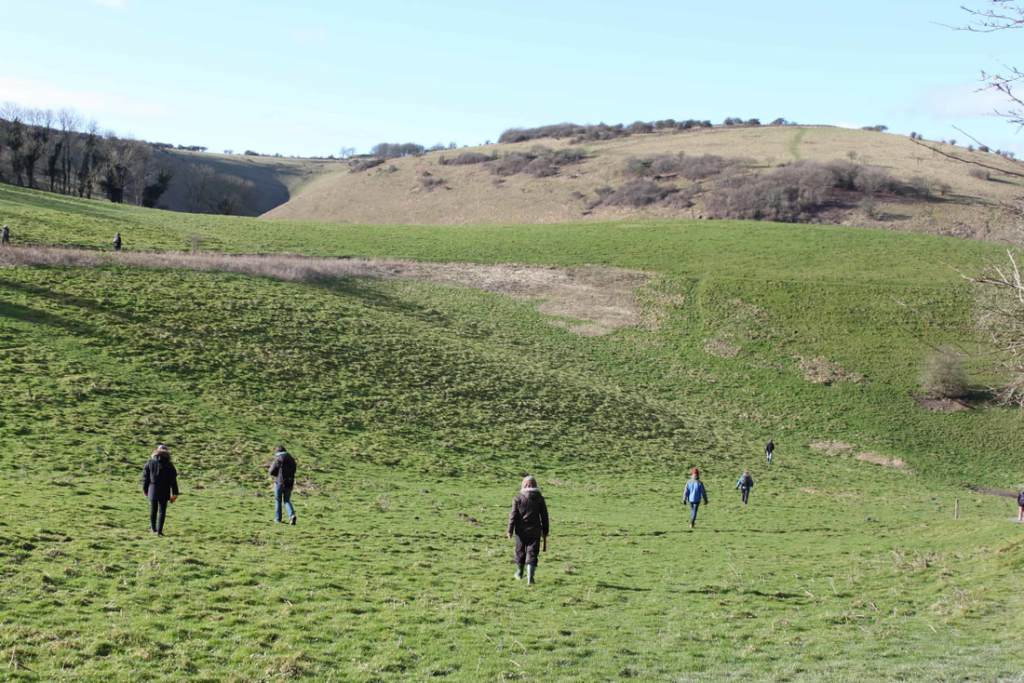
We do want them to get a feeling for this place though, so when it comes to it I paint a picture of the history of the rolling chalk grassland that surrounds us: 60 million years ago southern England was deep underwater, the chalk hills forming as billions of plankton died and fell to the sea floor.
The short springy turf on top of the chalk coming much later – just a few thousand years ago – when we humans first cleared trees for sheep grazing, and aided by browsing rabbits.
An ex-fashion editor, Charlotte is one of the well-respected Dark Mountain team, she has a confidence and a warm, keen intelligence. She’s also a powerful presenter, and a quirky whirlwind of energy. She gets that from the land she tells me.
Dark Mountain is a creative response to the current challenging times of collapse, and is redefining the stories embedded in our culture, shaping what a successful and good life on Earth could look like.
It’s not airy-fairy though, there are sharp minds involved, and Charlotte is one.
Charlotte in full flow, Earth Dialogue Feb 4th 2018
After a short introduction, she asks everyone to name their heartland: “a grove of trees… a viewpoint in Sussex… a place in Cornwall… Scotland…” we say.
The challenge of now, Charlotte throws in when we’re all done, is to make wherever we are feel like home.
That gets us thinking.
She invites one of our group to light the beeswax candle in the middle of a circle of eight stones, an ancient clock that Charlotte’s set up on the floor in front of us.
An Earth Dialogue is about connecting with a place, but it’s also about connecting with time – the real time of the cycles of sun, moon, and earth, the equinoxes and solstices, the seasons that affect the rhythm of our lives.
In contrast to the way we try to live these days: endless growth, eternal youth, and 24-7 culture, real time includes a cycle of decay, so that new things can come into being.
The stones in the clock represent key moments in this cycle. It’s not a coincidence that today is just a few days after the Celtic festival of Imbolc, the time of emergence when life is quickening in the soil, ready to burst through at the start of Spring just a few weeks away.
It’s a time of excitement, and stirring. The end of winter is approaching.
An Earth Dialogue is about listening to this, and it’s also about sensing the memory that’s held in the land.
We’re given instruction on how to connect.
“Feel the ground with your feet, the tingling is the earth’s energy, then feel your heart… go inwards… then boof… expand outwards to what you hear and what you see, and what you feel about this land, and this sky.
“See what you notice, and what you sense. The birds, the trees, other beings…
“We’re not normally aware of it, but nature is sending messages back and forth, like the mycelium that connect trees under the ground, passing information and energy from one to another. Everything is shifting and adjusting depending on what’s needed.
“Notice how everything interacts: the birds, the trees, the wind.
“See if you can get a sense of the energy of the place.
“You might even have a conversation with some of the beings. If you’re quiet and open, a tree or a bird might speak to you, in a word, or a sentence, or it could be quite chatty.
“This is two-way, it’s a communication not a meditation,” says Charlotte forcefully, gesturing from her heart.
“Of course your head, your thinking mind, might get in the way, but put that to one side and come back to your feet and your heart. And expand out with your senses again.”
“Got that?” she asks. We nod.
We’re hooked.
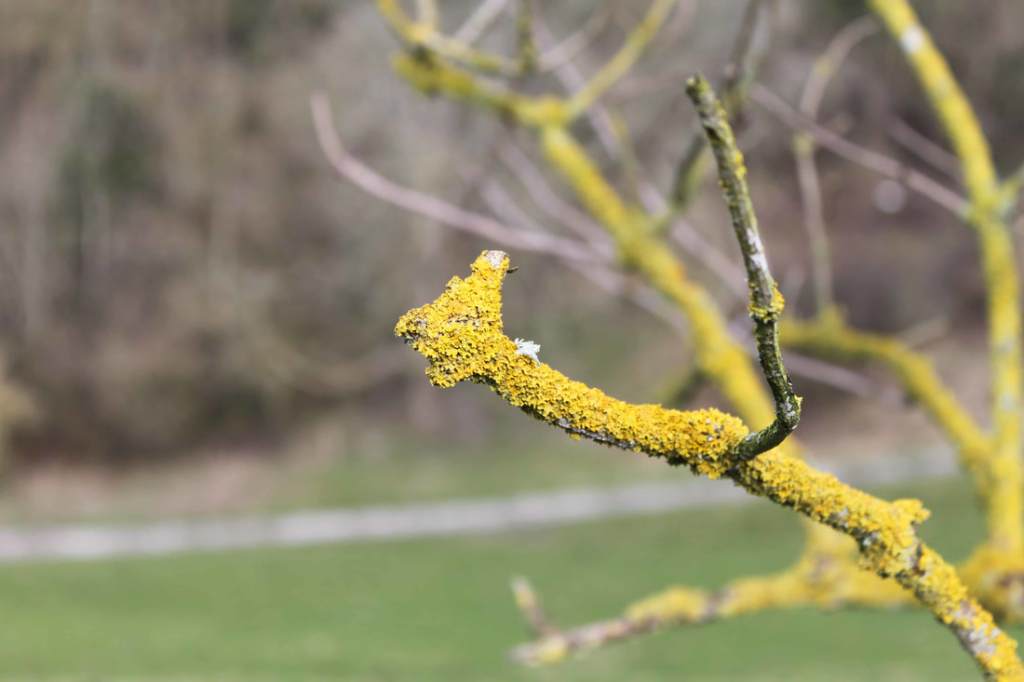
The elder is covered in lichen.
As a group we go out in silence onto the Downs, to find our spot and sit for a while and do the dialogue.
The sun is out. It’s a fresh clear day.
I sit on a slope by a small elder tree next to a sheep track, and watch crows joyfully flit across the sky. Cloud shadows wash across the forest of bare trees on the slope opposite.
When the sun comes out it warms my back, and lights up the luminous lime green lichen covering the elder.
I tune in and feel a fleeting sadness, then two gliders speed silently through the clear blue sky over head, taking my attention with them.
The elder tree looks asleep but as I look more closely, I notice one, then two, then tens of fresh red buds on its branches. The tree is waking from its winter slumber and life is about to burst forth.
Nothing is what it first seems.
I want to find stillness here but I’m agitated. The traffic from the nearby road is jarring in the cold air. The tree is making noises too. I feel it trying to get my attention. “I have to deal with this every day,” it’s saying.
I smile wryly but sense its frustration. The cars… us… humans… seem oblivious of the natural order, moving around and carrying on about our business without noticing our impact on the land and its beings.
From the road, is nature just a pretty backdrop to our busy lives?
It’s time we joined in.
I get up and look closer at the elder. The bark around the base of its trunk is worn smooth. “Sheep,” it tells me.
After an hour Charlotte calls us in.
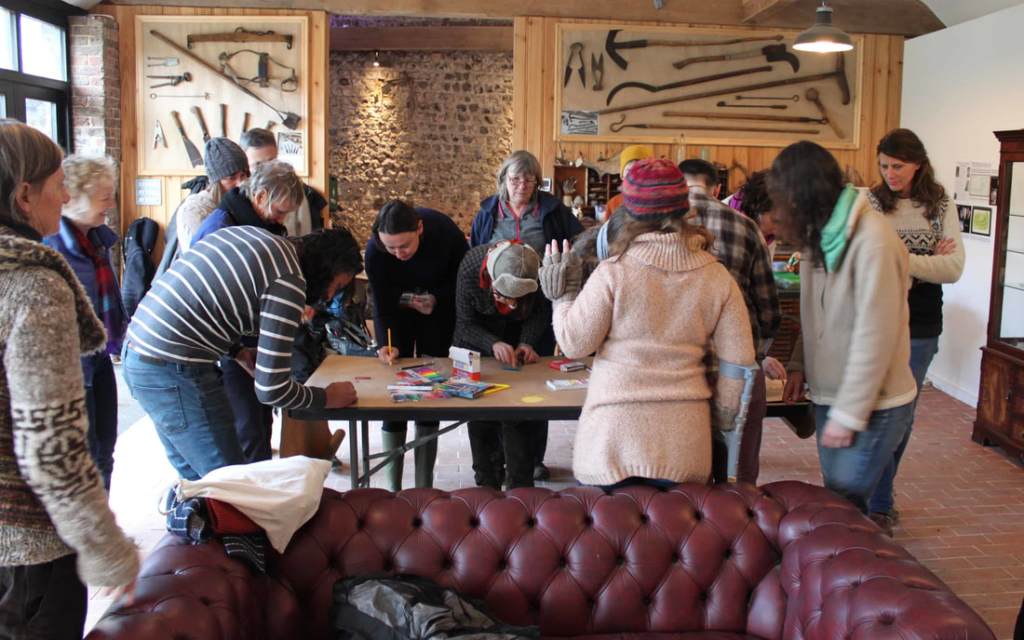
Map making around the table
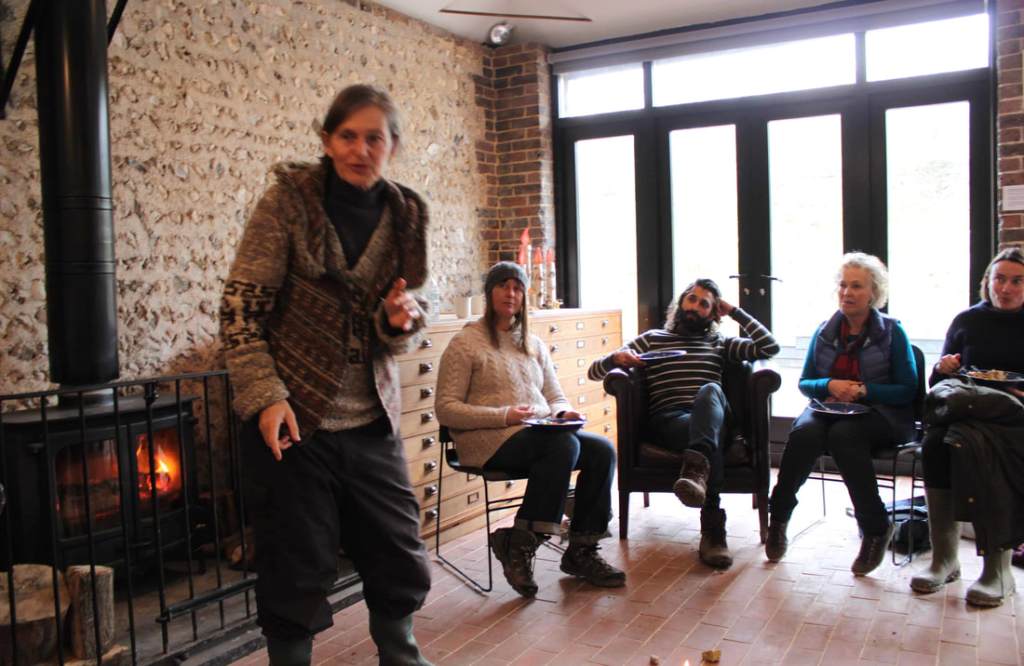
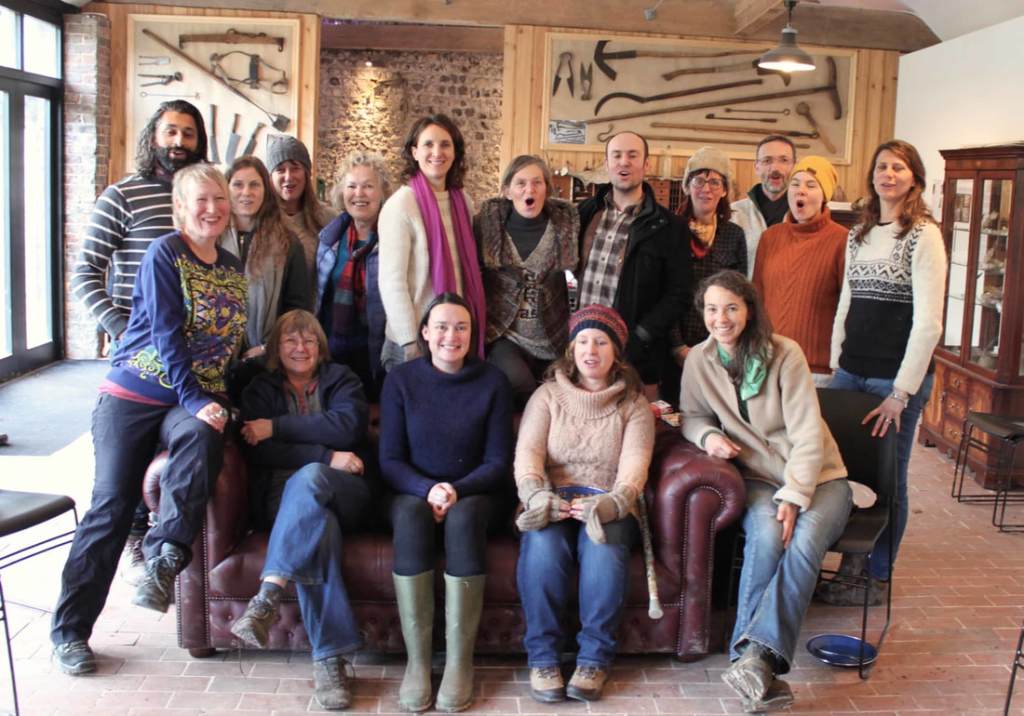
Back inside by the fire we share our stories. Everyone has had a different, deepening experience.
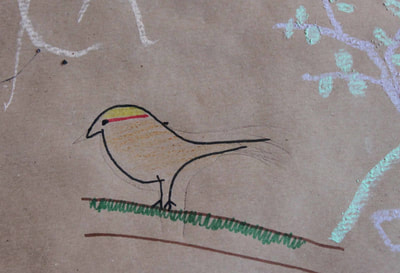
Someone has seen a pair of Goldcrests, quite rare these days.
Someone else has been feeling their grief in the chalk, another found support in the seat of a tree.
A few have been watching the clouds scud across the sky.
There’s grief and joy, irritation and wonder. And lots of noticing.
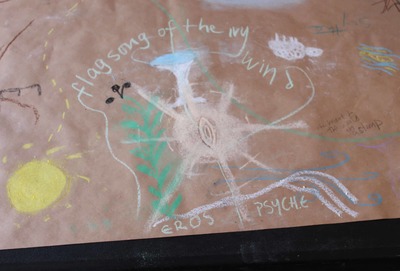
Together we make a group map of our dialogues. We gather round the table with chalk and crayon, pen and pencil. Colouring and shaping on the paper.
Meaning starts to appear. A few words. Lots of trees. Birds. Representations of feelings, encounters, stories of above and below ground.
Charlotte gets us to talk about it. Her unbridled enthusiasm is infectious. “This is what we need to do to ground our experience. Make something, talk about it. It’s important. It’s what we’re here to do.”
We stop and eat, and chat some more, til all too soon it’s time to go.
“Tugged at my heartstrings on lots of levels. A beautifully connecting experience,” wrote one of the group afterwards.
The room is buzzy and I can tell we all feel a bit more at home in this place.
And I didn’t even mention the Domesday Book.
Charlotte Du Cann edits the Dark Mountain Project and writes about mythology, metaphysics and cultural change. You can read more on her blog here.
These days, School of the Wild runs programmes that help leaders reconnect their teams and have space to think differently.
I’ve just seen a newt. My first wild one. It’s tiny and delicate looking, much smaller than I would’ve thought, about 10cm long and pretty drab-coloured. It’s swimming about on top of the water in the pond at the bottom of Vert Woods.
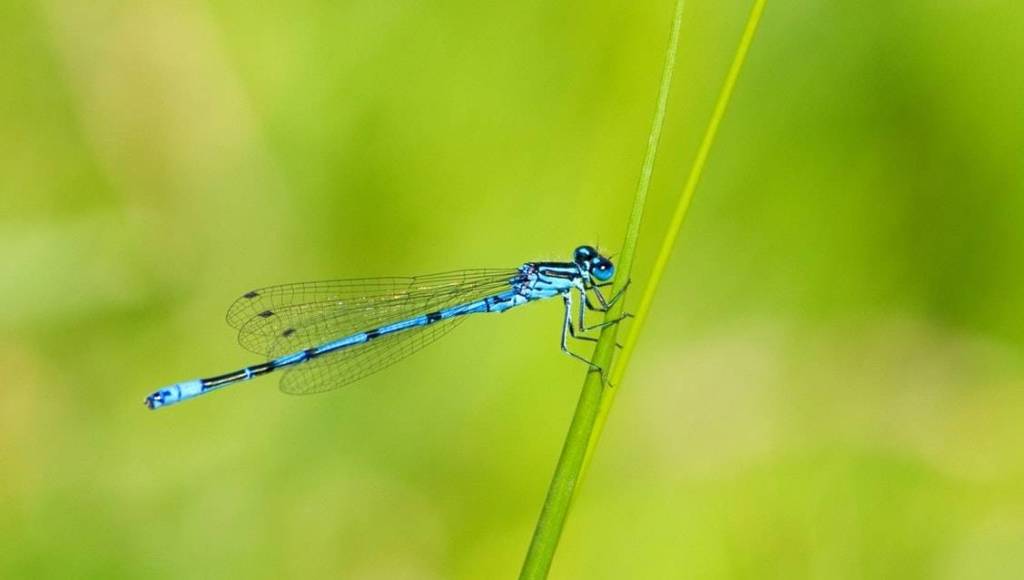
I think it’s pretty special but Stewart is more excited about the blue and red damselflies that are mating on the wing in the sunlight at the edges of the water.
“It’s busy isn’t it,” he says, implying that this doesn’t happen all the time. It must be unusual because as the site director, he is in these woods a lot.
“Anyway,” he says, in between taking pics of the flies, “there aren’t many newts here because the adders usually get them.”
“The adders?!?”
I’m camping on my own in these woods tonight and I’m already a bit nervous about that. I certainly don’t want to come across any snakes.
“Don’t worry,” he reassures me, “unless you stumble over one that’s asleep in the sun, your footsteps sound like huge booms to them, they’ll slither away before you get close.”
And as luck would have it I see no adders, nor anyone else apart from Stewart for that matter til later that evening.
It’s a beautiful sunny day and Stewart has let me drive the car in to drop off my camping gear. He’s also lent me an axe, a wood saw, a trug and a wheelbarrow.
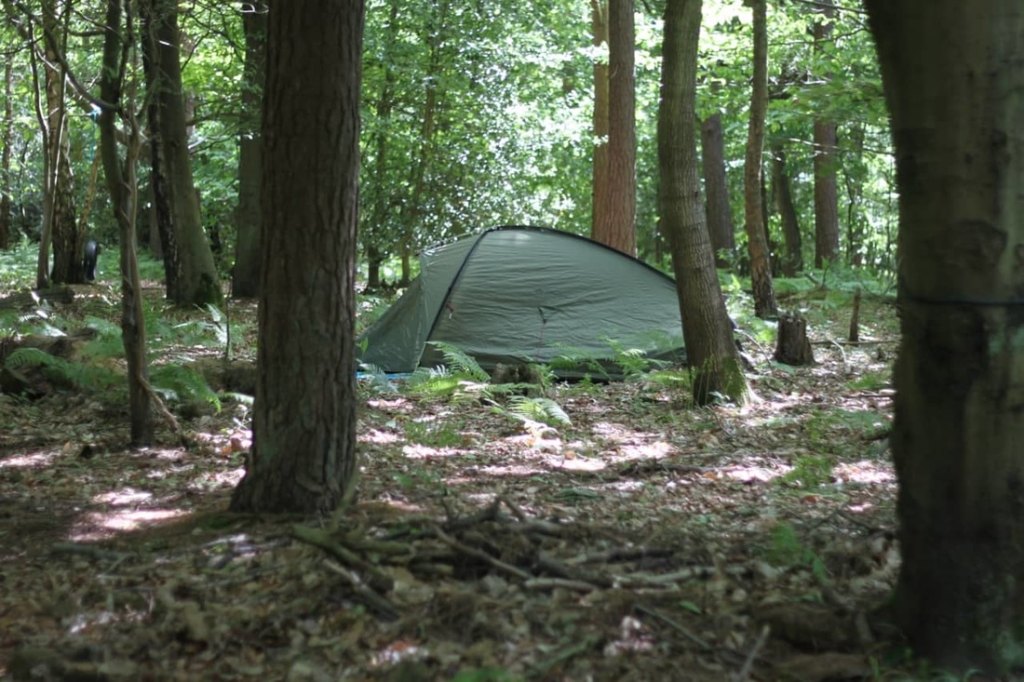
I pitch my tent, chop some wood for the fire, and go about the task of preparing for tomorrow’s Medicine Walk.
When enough setting up has been done, I take my camera for a walk around the woods. I can’t have gone far when a feeling of panic arises: I’m totally lost… the paths up ahead turn out not to be paths, just gaps in the undergrowth that lead everywhere and yet nowhere at the same time.
I stop walking because that’s the only sensible choice and reluctantly turn back the way I came.
I hate backtracking and it takes ten minutes before I stumble across a familiar fire circle in the middle of some trees, where I sit on a stump to recover myself.
The truth is I’m feeling anxious about tomorrow, and the forest is showing me that. Stopping in a familiar place calms me down. Perhaps this is my medicine.
A bit later, on the way back to camp I find a reassuring owl feather, it’s perfect for tomorrow’s altar.
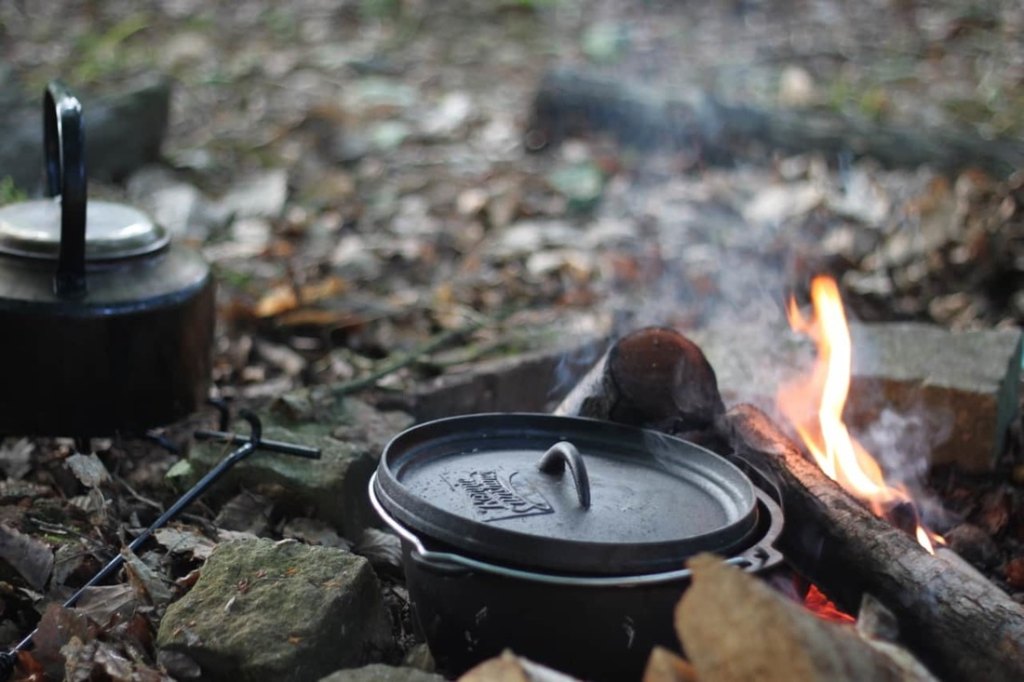
I make a fire and a cup of tea, and cook my dinner: quinoa and chicken stew – no one’s going hungry around my fire, especially me!
There’s a full moon fire ceremony in these woods tonight. Ali, the shaman from Rodmell, is worried that no-one will turn up, but enough people come, as they always do.
I help Stewart get the big drum out, and we carry it to the fire area. A party in the distance becomes a backing track to his and Ali’s drumming, and our silent full moon fire wishes.
I watch closely as Stewart builds a textbook tipi fire lay, but he and Ali struggle to get it going and it takes a while before the ceremony can begin.
Ironic because my fire was pretty scrappy, but alight at the first attempt.
I leave as soon as the ceremony’s over and head back to my tent. I’m shattered from making camp earlier and can’t wait to get to bed.
In the dark before I drift off I hear the wolf calls, a tradition for the full moon-ers as they reach the crossroads on the way out, then Stewart’s van as he drives away.
At last I have the woods to myself. Just me, the trees… and the adders.
I fall asleep immediately but wake about 2.30am. The moon is out, and the party is still softly thumping in the distance.
It’s quiet in the woods. I see a moving shadow and momentarily scare myself with the thought that someone else is walking about.
It’s a fear that stays with me for a short while before I drift back to sleep.
Next morning, the participants start arriving for the Medicine Walk, a ritual of solitary wandering in nature. The fire circle and altar that I’ve set up in the woods on the other side of the track are ready.
If a Medicine Walk has an aim, it’s to let go of the worries and concerns of daily life and instead to focus on what happens, and to listen to your instincts, be curious, and explore and encounter your fears.
The learning and insight come from the experiences that you have on the walk, and from what nature and the Mystery of the more-than-human world reflect back to you.
There is a lot to be gained from it.
M is the first to arrive. I remember her from another workshop a few months before. She works in distribution for a toy company that has locations around the world.
B works in finance and has just moved to a town nearby.
E has recently moved to the south coast from London. It’s a tricky place he says. He’s an artist, and is great at interpreting our stories.
D is colourful and delightful as ever. “I’m totally cleansed,” she announces on arrival, alluding to something she’s been to the day before.
C is a little quiet. Something difficult has happened to her, she won’t say what.
We start with introductions and a talking circle, which helps shed light on the life issues that they each bring, in preparation for the walk.
By mistake I’ve put the talking stick on the fire, so hastily I make a new one. It’ll do. It’s passed from person to person as they speak, only the person holding the stick is allowed to talk.
This is the Way of Council, a system of sharing that’s been used by Native Americans for hundreds of years.
Everyone gets increasingly honest and open as we go round the circle. From career to relationship to life questions, the issues unite us all, and we’re each hoping for something helpful and meaningful to be gained from the walk.
I go last. My makeshift talking stick breaks in my hand. Everyone laughs, but I know I haven’t been as honest as I could’ve been and start again.
The more authentically you can share, the more you get out of it and the better the experience, I’ve noticed.
When everyone has said their piece, I explain about the Four Directions, which can be helpful to bear in mind on the walk, and then read Sometimes by David Whyte. It’s a powerful poem at a time like this.
Then they go off with an invitation not to chat as that can break the spell, though one has a need to speak more and they slowly head off along the path.
They’ll be gone for several hours. My job is to keep the fire going and hold the fort. I settle in.
A few hours later and they return, with stories about their walks, rich with encounters, emotions and metaphors that shed remarkable insight on their lives.
We all listen and reflect each story to help find the meaning.
One has been drawn to symbols in the landscape that are to do with a past relationship, another finds pleasure in details that are relevant for her career, another has an encounter with an animal that is significant in her life, another starts to feel sad about what she’s doing, another has found some peace and creativity in the woods.
And Me? “I’ve been tending the fire,” I say, “watching the trees knock together, listening to the wind, whittling the broken half of the talking stick into a sharp point that I used to lift the lid on the kettle, and I’ve made silver birch twig tea.”
“I hear the story of a man who had a very productive time,” they say. I’m amazed at the relevancy of each walk… It’s been a powerful afternoon.
But for now, we say our goodbyes and leave.
Later M texts to say a big thanks, she was super energised afterwards.
Apart from mine, names and stories have been shortened and changed in the interests of confidentiality.
With thanks to everyone who came, Rebecca Joy Card for showing me how to do this, and for all the beings who supported the walk.
A couple of nights ago I went to see some live music.
I’d never seen or heard singer-songwriter Chris TT before, his songs, played mainly on acoustic guitar were a mix of clever folk-protest and psych-pop, with some fun chat in between.
After a couple of funny protest numbers, including one about saving a tree, he introduced his next song as being “as close to the real me as you’ll ever get.”
After all the songs looking outward, Words Fail Me, he said was his attempt to tell the truth about what was going on inside.
It was beautiful and moving, and touched the audience in a way that was very different. We all felt the emotion that the truth can bring.
It’s not something we do often but really speaking from the heart always resonates.It reminded me of a week I spent at Embercombe in Devon. Every morning before we did anything else we sat in a big circle, about 40 of us, and went round one by one saying whatever we needed to about how we felt and what was happening, without interruption. A sort of morning check-in.
For the first few days, I was terrified. It was a big group, and as my turn slowly approached, I could feel my heart pounding and my mind panicking about what to say. The fear kept my words short.
Three days in though and I found my voice. I was able to say something honest and truthful from the heart about what I was feeling and what being there meant to me. I was still nervous, but something changed for me.
You could tell when it had for other people too, and it became a moving, inspiring and powerful morning ritual that I looked forward to.
It’s something I’ve wanted to try at School of the Wild ever since, in our own way. To sit outside with trees, round a fire, in a circle – with fewer people, so it’s not as scary – and everyone says what’s in their heart, and be listened to.
It’s definitely a way to build deeper relationships and more meaningful connections. With others, and with yourself.
We did this by accident last summer in an impromptu day in Vert Woods. This year I’ve persuaded Rebecca Card to lead it, and because it’s better if it follows a structure, we’re using a technique called the Way of Council, used for hundreds of years by Native Americans.
Before then, Rebecca is also leading a Medicine Walk and Council on June 11th. If you’ve not done one of our Medicine Walks before, we also sit in circle first so you can work out the question you’re holding, then you go off for a solo three-hour walk that somehow turns the land into a mirror for your inner world.
I don’t quite know how it works, but something unexpected and helpful always seems to happen.
We’ve known people go out with questions about their career when it feels stuck, for example, or with other life questions, and come back brimming with vitality, and full of inspiration.
Part of the power of it lies in Rebecca’s reflection afterwards.
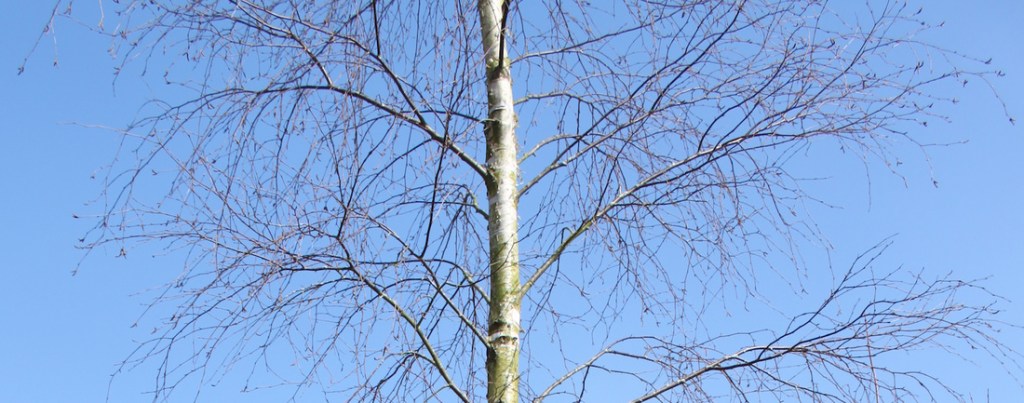
Since I was a child, Silver Birch has always been one of my favourite trees.
The wispy branches, and ghostly white bark always draw my attention in the woods.
Something about silver birch makes me feel safe. Perhaps because I can always tell it apart from other trees.
It has uses too.
The white peeling bark is great for lighting fires (and we may show you how to do that as part of our outdoor teambuilding away days) and the buds and twigs have tons of medicinal uses:
A great source of vitamin C, tannin, and flavonoids, silver birch is useful in preventing viral infections and even cancer.
Silver Birch contains powerful diuretic properties that help in flushing out harmful toxins, uric acid, and excess water from the body, making it a good anti-inflammatory, and helpful for maintaining kidney and liver health.
Its anti-inflammatory properties means it can treat conditions like arthritis, high cholesterol, heart and kidney swelling, and cystitis.
Silver birch stimulates the digestive system and aids in better digestion.
Its nutrients are also effective in strengthening the bones and boosting overall immunity.
I was happy to find out that you can make a tea from the twigs and buds.
I made some the other day and can attest that silver birch twig tea is delicious.
To make it:
collect a few handfuls of fresh twigs and buds
steep twig tips in boiling water, to taste
strain and drink!
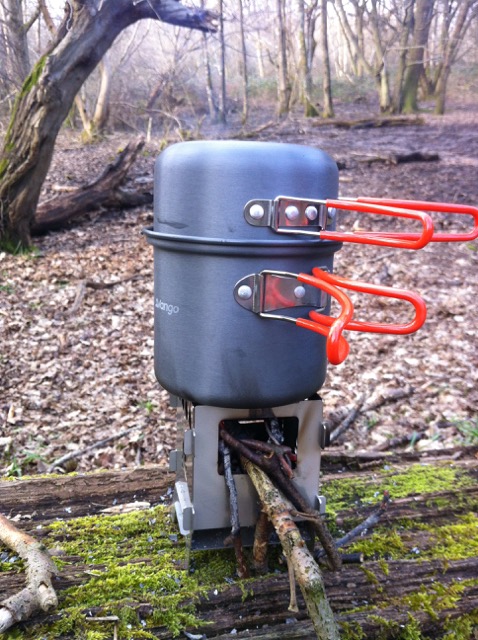
Silver Birch twig tea on the go. Made using a Bushbox multi-fuel stove. Markstakes Common, E Sussex, March 2016.
At School of the Wild, we help leaders of purpose-driven teams reconnect and think differently. We incorporate activities like making fires as part of creating space for meaningful conversations. Have a look at outdoor team building programmes or more info.
A Medicine Walk is a way of being with the land and yourself in a receptive, open and imaginal way.
It’s an opportunity to leave “your familiar world to wander, opening to new insights and gifts through direct and immediate contact with the wildness of the world, and returning to share this gift for the benefit of one’s People and one’s Place.” (John Davis, School of Lost Borders).
Essentially, this exercise has its roots in one of the oldest spiritual practices – of nature and human in a deep(er) conversation.
It is done consciously, in ceremony, making it different to just ‘going for walk’. There is intention. There may be a question to walk with, a question that may be asked to the land, to the other-than-human-world.
What to expect? The unexpected! It is important to be open to the wonder and magic of how life wants to reveal itself to you. You may think you know how your life should be, but the natural world has its own way of mirroring back to you the ‘medicine’ you may really need, or another way of looking at things.
I have known people to go out with questions about how to proceed with their career when it feels stuck and uninspiring, and come back brimming with vitality, full of inspiration.
I have known people go out with questions about their career when it feels stuck, and come back brimming with vitality, and full of inspiration.
There are those who feel they have lost their joy, their playfulness, and find their inner child, and are guided by their bodies and senses, rather than their minds and what they think they should be doing.
There are others who face their deep core wounds whilst out on the land, and through careful guidance, they may find a way of being in ceremony to support them moving through the stuck place where the wound has the better of them.
You may think you know how your life should be, but the natural world has its own way of mirroring back to you the ‘medicine’ you may really need
Whatever you are with, it is my experience that the land, the earth Herself, is the most supportive container to really be in your human-ness and to feel held.
It is important to say that sometimes you go out and, even with intention and/or a clear question, you return without feeling like you’ve received very much. It may be that there was a big expectation and then disappointment because the expectation wasn’t met.
It may be that you feel even more perplexed than when you went out. All of this is ‘normal’ and all of this is relevant. Not feeling you ‘got anything from it’, the disappointment or the perplexity are the medicine, hard though it may be to swallow.
You see, there is something going on behind the scenes, something bigger at work that requires careful attention so that you really can begin to start living as if you are not the one running the show!
Yes, letting go of the need to control is a huge part of a medicine walk.
Medicine Walks for leaders are held on a date to suit you. Details and Bookings here.
In Spring, when you’re still shaking off winter and haven’t quite fully moved on from the roast potatoes to salads, you need food, tonics, and remedies that support your body’s kick start.It’s no coincidence that Nature provides just the medicine you need, at just the right time,
These 10 bitter wild plants are part of Spring’s natural medicine chest that are just what your body needs to throw off winter’s sluggishness: they’re pungent, spicy, warming and cleansing to get your system going again, says herbalist Alice Bettany.
So if you are struggling with Spring coughs and colds, try some of these – they’re easy to spot and prepare.
A few years ago I was at forager Robin Harford’s Green Gathering on Exmoor.
It was a weekend of plant-based experiences. From workshops on foraging and fermentation to herbal remedies and storytelling round the fire… one of the sessions that had the most effect on me was an Earth Mandala workshop by artist Keith Beaney.
Keith got us collecting natural materials to contribute to a mandala frame that he’d created for us in the woods.
It was very muddy and wet, and initially I struggled with connecting with it, but suddenly something took over and I got caught up in the process, of being in the woods and looking around at the trees and wildlife for inspiration.
I started gathering white leaves, interesting twigs and unusual flowers for my section of the mandala, absorbed in a child-like flow.
It was an inspiring and fun creative process.
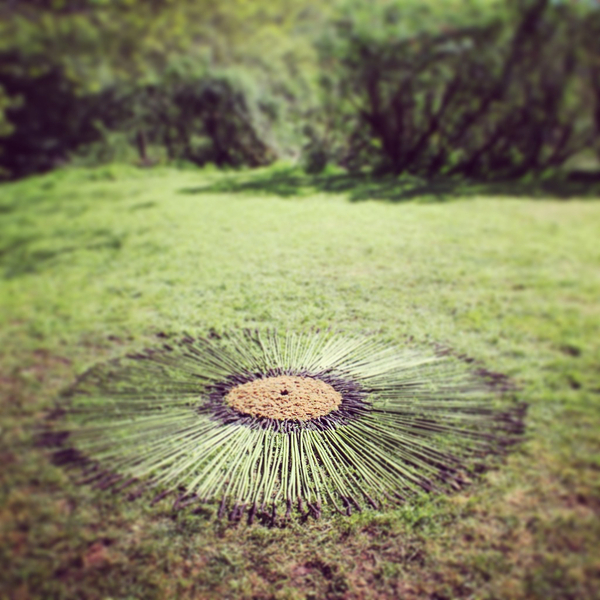
Each person in my group reported a similar experience. And the mandala we made together was really stunning. As was Keith’s own work that he made from foraged and found seed heads and plant stems. (see pic above)
Back in Brighton, I met Dutch artist Anniek Verholt, she’s a leader in therapeutic arts and uses a similar artistic process to Keith.
We talked about putting on a session for School of the Wild on the South Downs: the result was a Land Art and Mindfulness workshop.
In this workshop, Anniek guided us through an approach to art that incorporates a love of nature, and leading to a place of silence, connection and creative expression at a beautiful outdoor location on the South Downs.
In a similar process to what I did before, we created individual land art pieces with gathered natural materials that we feel intuitively drawn to, and get to see unique creative processes.
The idea is that by doing this, we each gain personal insights.
During the summer months in the UK, you can find an array of wild flowers on the South Downs that are useful for a range of health complaints, as well as being vital for wildlife.
Local herbalist Lucinda Warner took us up onto the South Downs in Sussex to forage for wild plants that make useful herbal medicine. Here are 12 of the wild plants that she showed us, and their uses. It’s an activity we sometimes includes as part of our outdoor team building and away day programmes for leaders and teams, it can offer useful learning.
Venue: Saddlescombe Farm, E. Sussex Date: Sunday 5th February 2017 Time: 9.30am to 5.30pm Facilitator: Rebecca Card
No of participants: 7
Hypothesis: When you create a ceremony with intention, something mysterious happens and the things that occur in the ceremony reflect what’s happening on the inside, and are symbolic – call it synchronicity, the Wyrd, the Mystery – which is helpful, nourishing and gives rise to useful insight.
Method: Set up an altar, sit around it in a circle. Everyone shares their personal story, authentic as you are able is helpful. Listen to each other, then go off for a solo walk in nature, choosing our own threshold. On returning, share story of what happened, reflections from the guide and other participants clarify and embed what happened.Results – Story of the walk: NB due to confidentiality I can only write about my own walk
February. It’s my birthday. I’ve sort of forgotten that, and instead of going out celebrating, I’ve arranged a medicine walk instead.
It feels right though, to be doing something reflective this year.
It’s a cold, grey start to the day, dry after a week of wet weather.

 Wild Human